
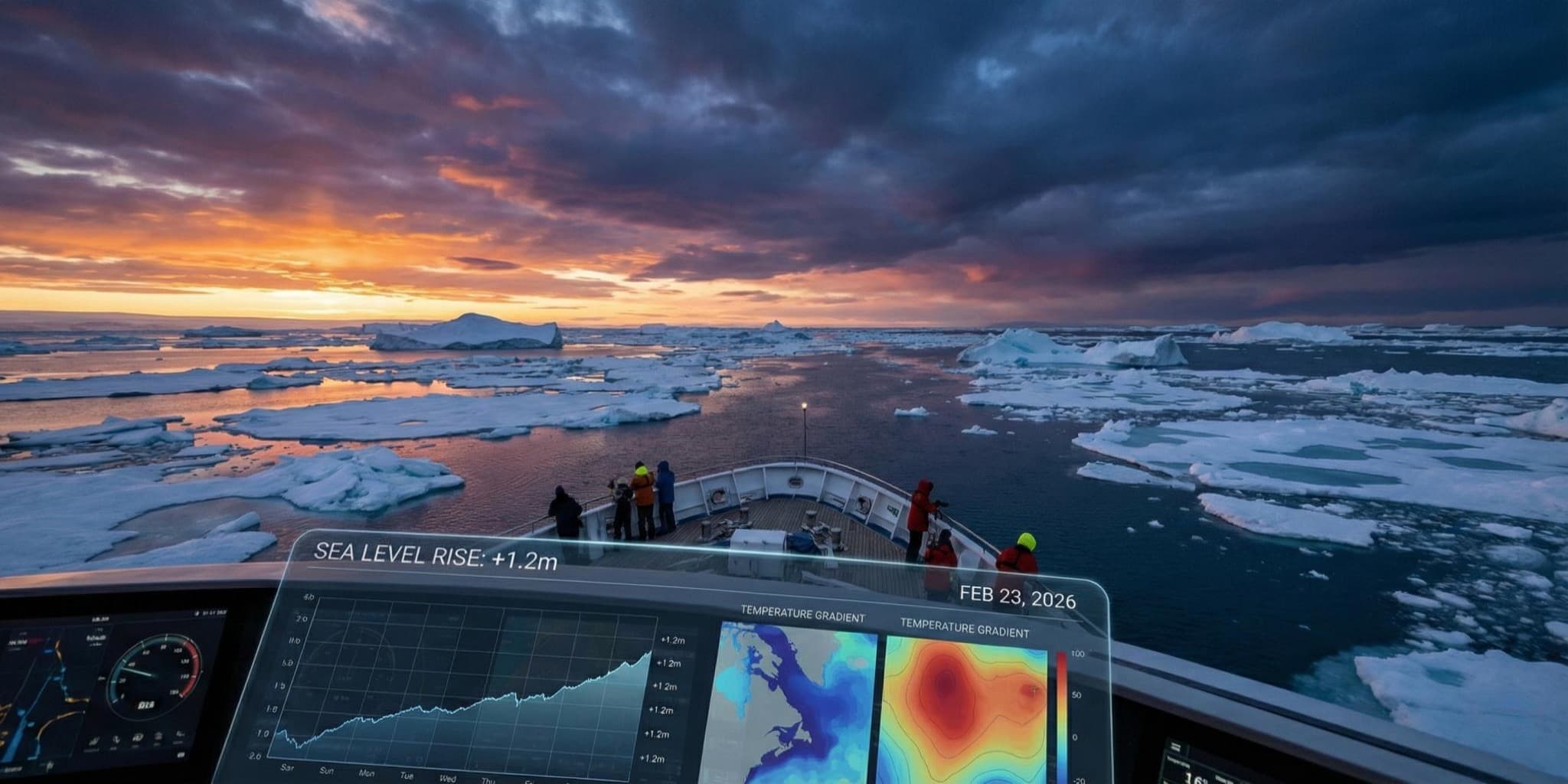
Navigating Change: Global Warming’s Impact on Sea Levels and Sailing Routes in 2026
Introduction: The Shifting Tides of Our Blue Planet
For the modern mariner, the ocean has always been a symbol of constancy—the eternal horizon, the rhythmic tides, and the predictable trade winds that have guided explorers for centuries. But as we sail through 2026, that constancy is being challenged. We are no longer just navigating the waters; we are navigating a fundamental transformation of our maritime world. The "dream" of the endless blue is now intertwined with the reality of a warming planet.
Global warming is no longer a distant forecast; it is a force that is actively redrawing our charts, altering our depths, and shifting the very winds we rely on for passage. From the historic stone quays of the Mediterranean to the low-lying coral atolls of the Pacific, the impact of rising sea levels is visible to any skipper with a keen eye. Yet, in this challenge lies a call to adventure and responsibility. Understanding these changes is not just about survival—it is about becoming a more sophisticated, conscious, and adaptable commander of the sea.
1. The Physics of a Rising Ocean
To understand how our routes are changing, we must first look at why the water is rising. In 2026, the data from satellite altimetry is clearer than ever.
- Thermal Expansion: As the ocean absorbs more than 90% of the excess heat from global warming, the water molecules expand. This "swelling" of the sea accounts for a significant portion of the sea-level rise we observe today.
- The Melting Cryosphere: The accelerated melting of glaciers and polar ice sheets in Greenland and Antarctica is pouring billions of tons of freshwater into our oceans.
- Regional Variability: Sea level rise is not uniform. Due to ocean currents and Earth’s gravitational field, some regions—like the Eastern Seaboard of the US and parts of Southeast Asia—are experiencing rise at twice the global average.
2. Redrawing the Routes: How Navigation is Evolving
The impact of global warming goes beyond just "more water." It is fundamentally changing how we plan our passages and interact with coastal infrastructure.
The Opening of Northern Frontiers
Perhaps the most dramatic shift in 2026 is the increasing viability of the Northwest Passage. What was once an impossible ice-bound labyrinth is now becoming a seasonal route for specialized expedition yachts. While this offers a shorter route between the Atlantic and Pacific, it brings immense ecological responsibility and the challenge of navigating "uncharted" waters where traditional markers don't exist.
Shifting Trade Winds and Weather Patterns
- The Tropical Expansion: The "conveyor belt" of the ocean and atmosphere is shifting. Traditional trade winds are becoming less predictable, with some regions experiencing "stalls" while others face increased intensity.
- Increased Storm Frequency: Warmer waters act as high-octane fuel for tropical cyclones. In 2026, the "Sailing Season" in the Caribbean and the South Pacific is being squeezed, requiring skippers to utilize advanced AI-driven weather forecasting to find safe windows.
- Ocean Current Fluctuations: Changes in water temperature and salinity are affecting major currents like the Gulf Stream. For the long-distance cruiser, this means traditional "Current-Assisted" routes must be recalculated annually.
3. Impact on Coastal Infrastructure and Destinations
Rising seas are not just a problem for the deep ocean; they are a direct threat to the harbors and coves that serve as our sanctuaries.
- "Nuisance Flooding" in Historic Ports: Many of our favorite 2026 destinations, like Venice, the low-lying parts of Kotor, or the islands of the Maldives, are facing increased flooding during high tides, affecting dock access and shoreside facilities.
- The "Drowning" of Coral Reefs: Coral reefs, which act as natural breakwaters for many anchorages, are struggling to keep pace with rising levels. As reefs deepen, the protection they offer against swells diminishes, making previously "calm" coves more exposed.
- Marina Adaptation: In 2026, we are seeing a massive shift toward floating dock systems. Fixed stone piers are becoming obsolete in regions with high sea-level rise, as they are frequently submerged during storm surges.
4. Comparison: The Sailing Reality - 1996 vs. 2026
| Feature | Maritime Reality 1996 | Maritime Reality 2026 |
| Global Sea Level | Baseline | +10-12 cm (Global Average) |
| Arctic Navigation | Virtually Impossible | Seasonal Expedition Routes Open |
| Forecasting | Static Weather Fax | Real-time AI/Satellite GRIBs |
| Infrastructure | Fixed Stone Quays | Floating Pontoon Systems |
| Marine Heatwaves | Rare | Frequent / Impacting Routes |
| Sustainability | Niche Concern | Hybrid/Electric Propulsion Focus |
5. The 2026 Adaptability Checklist for Skippers
As we navigate this changing landscape, the professional mariner must adopt a "Climate-Ready" mindset:
- [ ] Update Your Charts Digitally: Traditional depth soundings on old charts may no longer be accurate in silting estuaries or rapidly changing coastlines. Ensure your 2026 charts use the latest bathymetric data.
- [ ] Monitor Water Temperatures: Warmer water can affect your engine's cooling efficiency. In 2026, ensuring your heat exchangers are pristine is critical for high-latitude or tropical cruising.
- [ ] Support Blue Carbon Initiatives: When choosing your 2026 charter, prioritize companies that support seagrass and mangrove restoration—these are our best natural defenses against storm surges.
- [ ] Rethink Your Anchorages: What was a "sheltered" bay 10 years ago may now be prone to surge due to reef degradation. Always verify the "fetch" and new depth realities.
- [ ] Invest in Self-Sufficiency: With shoreside infrastructure under pressure, having a 2026 yacht equipped with solar, wind, and high-output watermakers is no longer a luxury—it’s a safety requirement.
Conclusion: Command the Future of the Sea
Global warming is undoubtedly the greatest challenge facing the maritime community in 2026. However, it is also an opportunity to refine our craft. By becoming students of the changing ocean, we become better navigators, better stewards, and more resilient explorers. The sea is changing, but the spirit of the voyager remains the same: to meet the horizon with courage, knowledge, and a deep respect for the elements.
Are you ready to sail the future? Whether you are interested in a climate-conscious expedition to the North or a luxury charter on a solar-hybrid catamaran, we are here to help you navigate the 2026 oceans with confidence and purpose.
[Explore Our 2026 Eco-Friendly Fleet and Book Your Voyage of Discovery Today]
FAQ Section
Q: How much has the sea level actually risen for a sailor to notice?
A: While 10–12 cm sounds small, it is most noticeable during "King Tides" or storm surges. In 2026, many sailors notice that docks they used to step up to are now level with the boat, or that certain low-clearance bridges are now impassable during high tide.
Q: Will traditional sailing routes like the "Coconut Run" disappear?
A: They won't disappear, but the "timing" is shifting. In 2026, skippers are leaving earlier or later in the season to avoid the widening windows of hurricane and cyclone activity. The routes remain, but the "rulebook" for when to sail them is being rewritten.
Q: Does global warming affect the salinity of the water?
A: Yes. The melting of polar ice is adding massive amounts of freshwater to the North Atlantic. For the 2026 mariner, this can affect the boat's buoyancy slightly and, more importantly, can alter the strength and direction of major ocean currents like the Gulf Stream.
Tags:
Related Articles
Mastering the Skies: A 2026 Guide to Identifying Sea Birds for the Modern Mariner
Uncover the secrets of the horizon. Master the art of identifying sea birds and learn how these masters of the wind can guide your 2026 sailing adventure.
Savor the Blue: The Ultimate 2026 Guide to Sustainable Fishing and Seasonal Dining
Protect our oceans while indulging in the finest catch. Master the 2026 sustainable seafood calendar and discover the "Best Choice" fish for your next voyage.
The Sea of Stars: Witnessing Bioluminescence and Glowing Plankton in 2026
Dive into a living galaxy. Discover the best 2026 routes to witness the magic of bioluminescence and how to capture the ocean’s glow from your yacht.