
Mastering the Skies: A 2026 Guide to Identifying Sea Birds for the Modern Mariner
Introduction: The Sentinels of the Deep
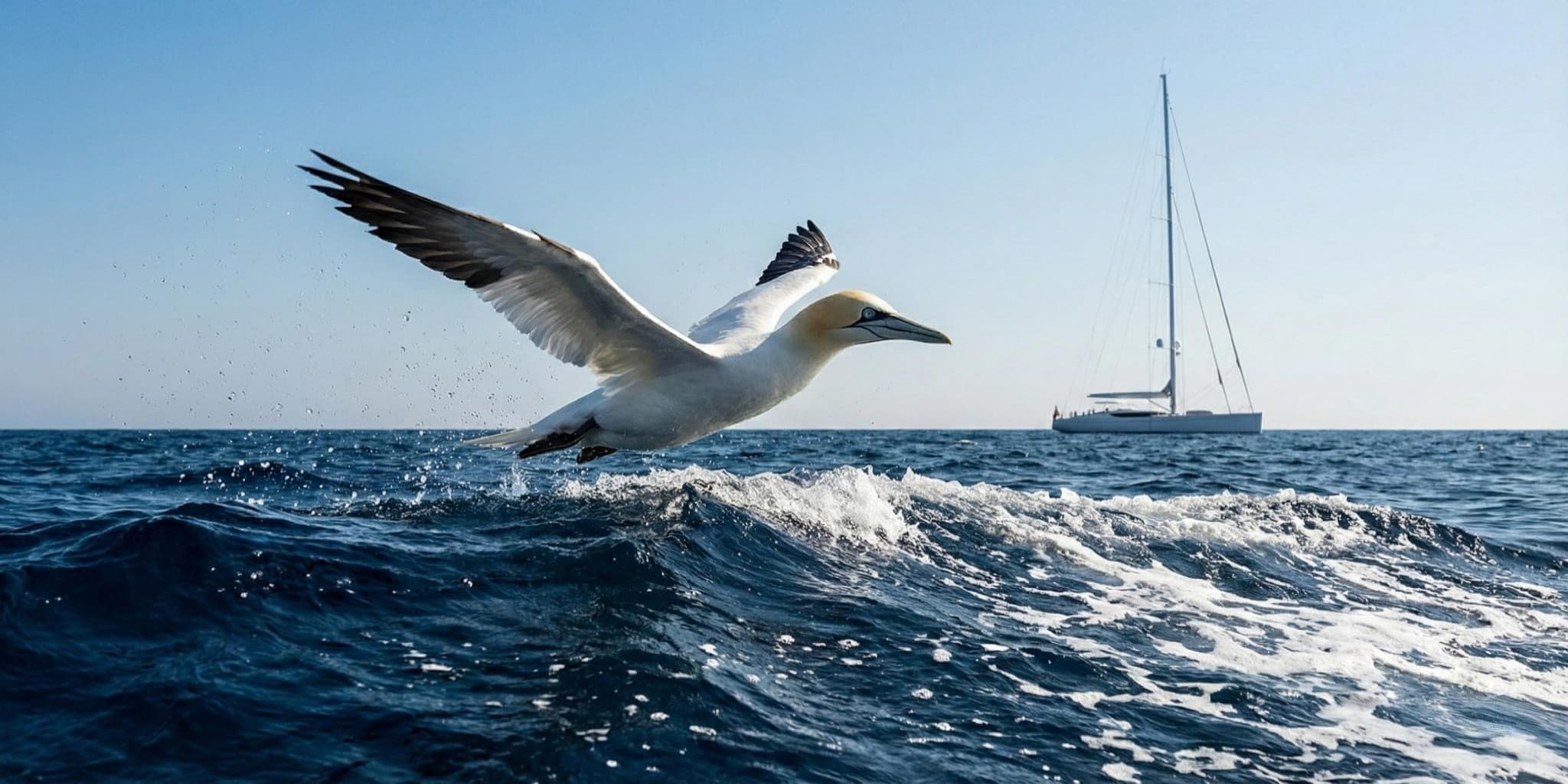
Imagine you are mid-passage on the Mediterranean, the coastline of Sardinia long since vanished beneath the sapphire rim of the world. The silence is absolute, broken only by the rhythmic hiss of the hull through the water. Suddenly, a shadow flickers across your mainsail. A sleek, white shape glides effortlessly into the wind, barely inches above the whitecaps, before soaring into the blue. In that moment, the vast emptiness of the ocean is transformed. You aren't just a traveler; you are a witness to a complex, ancient ecosystem.
For the senior mariner, identifying sea birds is more than a casual hobby—it is a vital skill that bridges the gap between navigation and nature. These birds are the "eyes" of the ocean, signaling the presence of schools of fish, approaching weather systems, or the proximity of land. However, the "problem" for many sailors is that at 20 knots, a bird is often just a fleeting silhouette against a bright sky. In 2026, as we embrace more sustainable yachting and deeper maritime awareness, understanding these winged masters is the hallmark of a true commander. This guide is your authoritative roadmap to identifying the most iconic sea birds you will encounter on your next blue cruise.
1. The Anatomy of Observation: How to Look
To identify a bird at sea in 2026, you must look past the feathers. Sailors use a specific diagnostic hierarchy to categorize what they see through their gyro-stabilized night vision or thermal optics.
- The Flight Pattern: Does the bird "dynamic soar" (utilizing the wind gradient near the waves) like an Albatross, or does it have a rapid, frantic wingbeat like a Puffin?
- Silhouette and Wing Shape: Long, thin wings are built for high-speed gliding; short, rounded wings are for agility and diving.
- Beak Morphology: A hooked beak indicates a predator or scavenger (Skua), while a spear-like beak is the tool of a high-speed plunge-diver (Gannet).
- Behavior: Is it following your wake? Birds like Storm Petrels often follow yachts to pick up small organisms stirred by the propeller.
2. Iconic Species of the Blue: Profiles for 2026
The following species are the "Big Three" of the northern and southern sailing circuits. Mastering these will give you the baseline for almost any blue-water voyage.
The Northern Gannet (The Plunge-Diver)
Gannets are the spectacular acrobats of the Atlantic. They are large, white birds with distinctive black wingtips and a yellowish head.
- Expert Tip: If you see Gannets circling and then tucking their wings to dive like arrows into the water, you have found a massive school of baitfish. In 2026, many anglers use Gannet activity as a "natural sonar" to locate tuna.
The Cory’s Shearwater (The Mediterranean Ghost)
A staple of any Mediterranean blue cruise near Malta or the Balearics. They are brownish-grey and seem to "shear" the water, their wingtips almost touching their own reflection.
- Identification Key: They have a distinctive yellow bill and a slow, effortless glide that makes them look like they are floating on the wind itself.
The Magnificent Frigatebird (The Pirate of the Tropics)
If you are chartering in the Caribbean in 2026, the Frigatebird is your constant companion. With a massive wingspan and a deeply forked tail, they look like prehistoric silhouettes.
- Behavioral Note: They are "kleptoparasites," meaning they don't dive for their own fish; they harass other birds until they drop their catch.
3. Comparison: Common Sea Bird Families at a Glance
| Family | Wing Style | Typical Behavior | Found In |
| Procellariids (Petrels/Shearwaters) | Long, stiff wings | Dynamic soaring / Wake following | Global / Pelagic |
| Sulids (Gannets/Boobies) | Spear-shaped | High-altitude plunge diving | Coastal / Tropical |
| Larids (Gulls/Terns) | Versatile / Flapping | Scavenging / Hovering | Near Shore / Marinas |
| Fregatidae (Frigatebirds) | Angular / Forked Tail | Aerial piracy / Soaring | Tropical Waters |
4. The 2026 Birdwatcher’s Maritime Checklist
To ensure you can identify your feathered companions with professional accuracy, run through this equipment and protocol audit:
- [ ] High-Resolution Binoculars: In 2026, we recommend 7x50 stabilized binoculars. They provide the perfect balance of magnification and field-of-view on a moving deck.
- [ ] Digital Logbook: Use an app like Merlin Bird ID or a dedicated maritime log to record sightings. In 2026, citizen science data from sailors is vital for tracking shifts in bird populations due to climate change.
- [ ] Respect the Distance: Sea birds are often resting on the water to conserve energy. Never steer your yacht directly toward a group of sitting birds; give them a wide berth of at least 100 meters.
- [ ] Camera Settings: When photographing birds in 2026, use a high shutter speed (at least 1/2000s) to freeze the motion of the wings against the bright sea glare.
- [ ] Lighting Conditions: Morning and late afternoon provide the best "side-lighting," making it easier to see the color of the beak and feet, which are often the final clues for identification.
5. Expert Tip: The "Land-Lovers" Warning
As a senior mariner, you should know that some birds are "land-bound." If you see a Pigeon, a Hawk, or a small songbird landing on your deck mid-ocean, it is often exhausted and blown off-course by a storm. In 2026, we practice the "Quiet Sanctuary" rule—offer a shallow dish of fresh water (never bread) and let them rest. They will usually depart once they've recovered their "sea legs."
Conclusion: Expanding Your Maritime Vision
Identifying sea birds transforms the horizon from a line into a story. It connects you to the rhythms of the planet and the secrets of the deep in a way that no chart plotter ever could. In 2026, as we move toward a more conscious and adventurous way of sailing, these masters of the sky are our most honest guides. When you recognize the silhouette of a Shearwater or the dive of a Gannet, you aren't just sailing; you are communicating with the ocean itself.
Are you ready to discover the wilder side of the blue in 2026? Whether you’re looking for a luxury catamaran to explore the bird-rich cliffs of Gozo or a performance yacht for a deep-sea passage, our 2026 specialists are ready to help you launch your adventure.
[Explore Our 2026 Eco-Conscious Fleet and Book Your Voyage Today]
FAQ Section
Q: Do sea birds sleep while flying during long migrations?
A: Yes! In 2026, researchers have confirmed that birds like the Frigatebird can engage in "unihemispheric slow-wave sleep," meaning one half of their brain sleeps while the other handles navigation and flight. This allows them to stay airborne for weeks at a time.
Q: Why do some sea birds follow the boat for hours?
A: Most are following the "pressure wave" created by the yacht's hull or the turbulence of the wake, which brings small fish and plankton to the surface. For birds like Storm Petrels, a moving yacht is a floating buffet.
Q: Are sea birds protected by international law in 2026?
A: Yes, many species fall under the Agreement on the Conservation of Albatrosses and Petrels (ACAP). As a mariner, you are legally and ethically required to avoid disturbing nesting sites on remote islands and to ensure no plastic waste from your vessel enters their habitat.
Tags:
Related Articles
Savor the Blue: The Ultimate 2026 Guide to Sustainable Fishing and Seasonal Dining
Protect our oceans while indulging in the finest catch. Master the 2026 sustainable seafood calendar and discover the "Best Choice" fish for your next voyage.

The Sea of Stars: Witnessing Bioluminescence and Glowing Plankton in 2026
Dive into a living galaxy. Discover the best 2026 routes to witness the magic of bioluminescence and how to capture the ocean’s glow from your yacht.

Navigating Change: Global Warming’s Impact on Sea Levels and Sailing Routes in 2026
Charting a changing ocean. Discover how rising sea levels and shifting climates are redrawing the world’s maritime maps and sailing routes in 2026.