Vendée Globe 2026: Mastering the Everest of the Seas
Introduction: The Ultimate Human Solitude
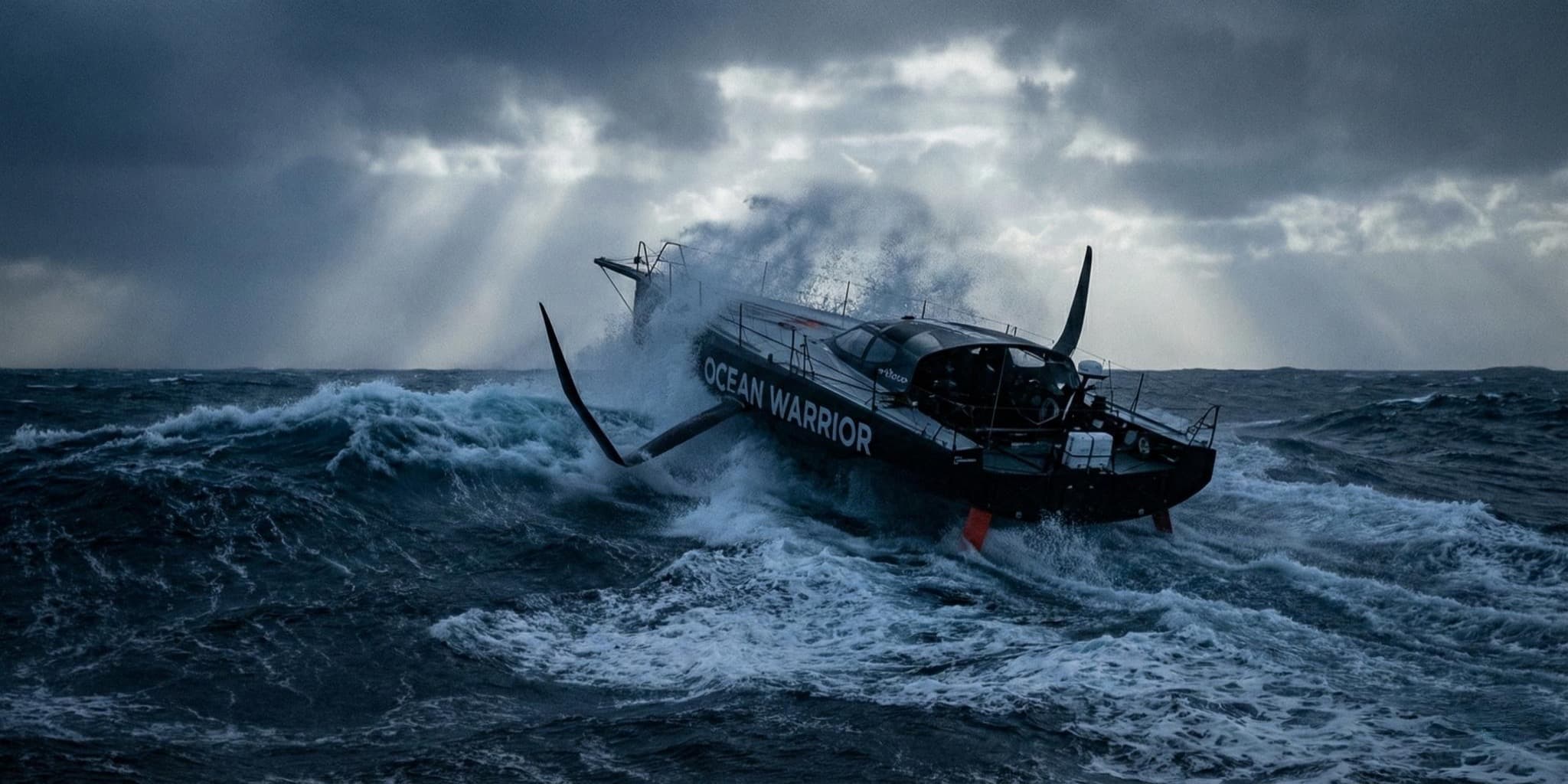
There is a specific, haunting silence found only at $48^{\circ}$ South, thousands of miles from the nearest human heart. In this desolate stretch of the Southern Ocean, the only sound is the shrieking of the wind through carbon-fiber rigging and the violent hum of foils slicing through freezing saltwater at 30 knots. This is the world of the Vendée Globe—the only solo, non-stop, unassisted round-the-world sailing race.
Often called the "Everest of the Seas," the Vendée Globe is more than a regatta; it is a brutal experiment in human endurance and mechanical limits. As we reflect on the historic 10th edition that concluded in early 2025, the maritime world is still reeling from the statistics. For the modern yachtsman or charterer, the Vendée Globe represents the pinnacle of what is possible when high-tech engineering meets unyielding spirit. Whether you are navigating a luxury catamaran in the Mediterranean or dreaming of the deep blue, understanding this race is essential to mastering the language of the sea.
1. Shattering the 80-Day Myth: The 2025 Records
For years, Jules Verne’s "Around the World in 80 Days" was the psychological benchmark for circumnavigation. In 2025, that benchmark didn't just fall—it was obliterated.
- The New Standard: French skipper Charlie Dalin, aboard MACIF Santé Prévoyance, crossed the finish line on January 14, 2025, setting a staggering new race record of 64 days, 19 hours, 22 minutes, and 49 seconds.
- A Massive Leap: Dalin improved upon the previous 2017 record set by Armel Le Cléac'h ($74\text{d } 03\text{h}$) by over 9 days.
- The 24-Hour Sprint: The race saw the 24-hour solo distance record broken repeatedly. Sébastien Simon set the final benchmark during the 2024-2025 edition, covering 615.33 nautical miles in a single day—averaging a mind-bending 25.64 knots.
2. The 10th Edition: Diversity and Participation by the Numbers
The 2024-2025 edition was the most inclusive and international in the race's history, proving that the Southern Ocean is a meritocracy that respects only skill and grit.
Participation and Demographics
The fleet of 40 skippers represented a significant expansion in the race’s global reach:
- Gender Representation: The race featured 6 female skippers (15% of the fleet), matching the record set in 2020. Justine Mettraux (Switzerland) claimed the new female race record, finishing 8th overall in 76 days, 01 hour, and 36 minutes.
- International Reach: 14 international (non-French) skippers competed, representing 11 different nationalities. This edition welcomed the first-ever Chinese finisher, Jingkun Xu, who completed the journey in 99 days.
- Age and Inclusivity: The age gap spanned 42 years, from the youngest participant in history, Violette Dorange (23), to the legendary Jean Le Cam (65). The race also included 2 skippers with disabilities, highlighting the adaptive engineering of modern IMOCA 60s.
3. Comparison: The Evolution of the "Everest"
| Metric | 1989 (Inaugural Race) | 2024-2025 (10th Edition) |
| Start/Finish Participants | 13 Starters / 7 Finishers | 40 Starters / 32 Finishers |
| Winning Time | 109 Days (Titouan Lamazou) | 64 Days (Charlie Dalin) |
| Average Winning Speed | ~9 Knots | ~17.8 Knots |
| Completion Rate | 53% | 80% (Highest Ever) |
| Technology | Heavy Steel/Aluminum Hulls | Carbon Fiber Foiling IMOCAs |
4. The Three Pillars: Solo, Non-Stop, Unassisted
What separates the Vendée Globe from every other sporting event in 2026 is its "Pure" status. To finish is to be part of a group smaller than the number of people who have been to space.
- Solo: No other human may step on board. If the skipper is injured, they must treat themselves with remote guidance from the race doctor.
- Non-Stop: A sailor cannot dock at a port or even tie up to a buoy. They may anchor in a sheltered bay to climb the mast or repair the hull, but they cannot step onto land.
- Unassisted: This is the most grueling rule. No weather routing from shore is allowed. The skippers must be their own meteorologist, sailmaker, plumber, and software engineer while operating on 20-minute "micro-naps."
5. The 2026 Perspective: Why the Vendée Matters to You
For the recreational sailor or charterer in 2026, the Vendée Globe is the ultimate laboratory. The technologies refined in the Southern Ocean eventually trickle down to our own yachts:
- [ ] Energy Independence: The 2024-2025 race saw OceansLab debut hydrogen fuel cell technology. This push for net-zero energy is now arriving in the 2026 charter market.
- [ ] Safety at Sea: Systems like OSCAR (AI-driven collision avoidance) were perfected by Vendée skippers to detect "UFOs" (Unidentified Floating Objects) in the water.
- [ ] Ergonomics: The "fully enclosed" cockpit designs used by Dalin and Richomme are influencing the design of 2026 performance cruisers, prioritizing protection from the elements.
Conclusion: The Horizon Belongs to the Brave
The Vendée Globe reminds us that even in a world of satellite connectivity and AI, the ocean remains a wild, untamable frontier. It is a testament to the fact that the most sophisticated piece of equipment on any boat is the human will. As we look toward the next edition in 2028, the records of 2025 stand as a lighthouse for what we can achieve.
Would you like me to find a high-performance 2026 yacht charter that features the foiling technology inspired by the Vendée Globe, or perhaps help you plan a voyage to Les Sables-d'Olonne to walk the historic finish line yourself?
FAQ Section
Q: How do Vendée Globe skippers sleep and eat?
A: Skippers use "polyphasic" sleep, taking 20-minute naps throughout the day and night to ensure they can frequently monitor the boat and the horizon. Food is almost exclusively freeze-dried to save weight, though many take a few "luxury" vacuum-sealed meals for morale during holidays like Christmas.
Q: What is the "Antarctic Exclusion Zone" (AEZ)?
A: The AEZ is a virtual boundary established by race direction to keep skippers north of the iceberg-dense waters near Antarctica. In 2026, satellite tracking of icebergs is more precise than ever, but the AEZ remains a critical safety limit to prevent catastrophic collisions.
Q: What happens if a boat breaks down in the middle of the Southern Ocean?
A: There is no "tow truck." If a boat is disabled, the skipper must attempt repairs with whatever materials they have on board. In extreme cases (like a sinking), the race direction coordinates a rescue using the nearest fellow competitors—a tradition of maritime solidarity that is a hallmark of the race.
Tags:
Related Articles
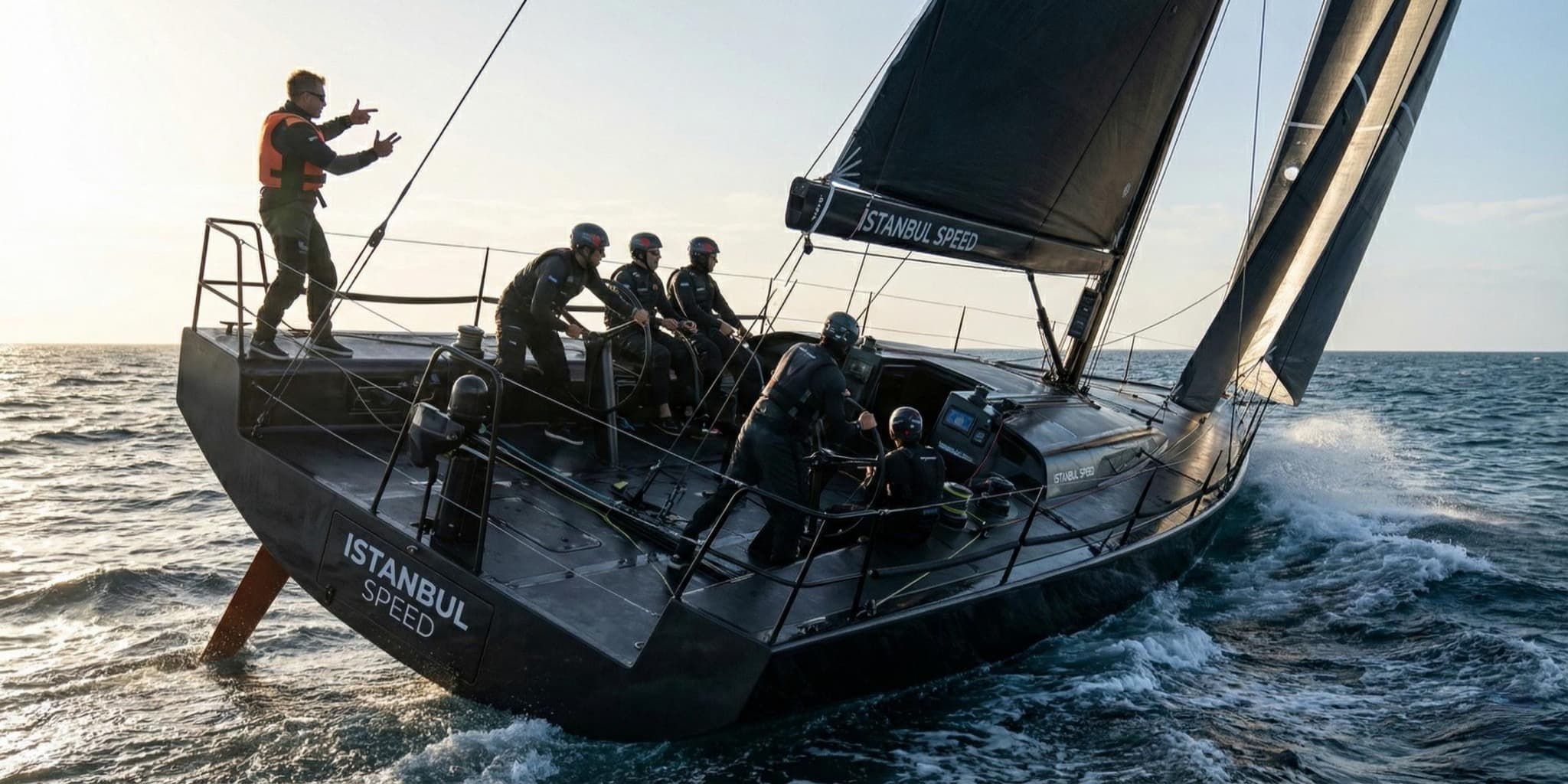
Beyond the Helm: Mastering Racing Crew Positions and Duties in 2026
Transition from passenger to performer. Master the vital racing crew positions and duties that drive a championship-winning yacht in the 2026 regatta season.
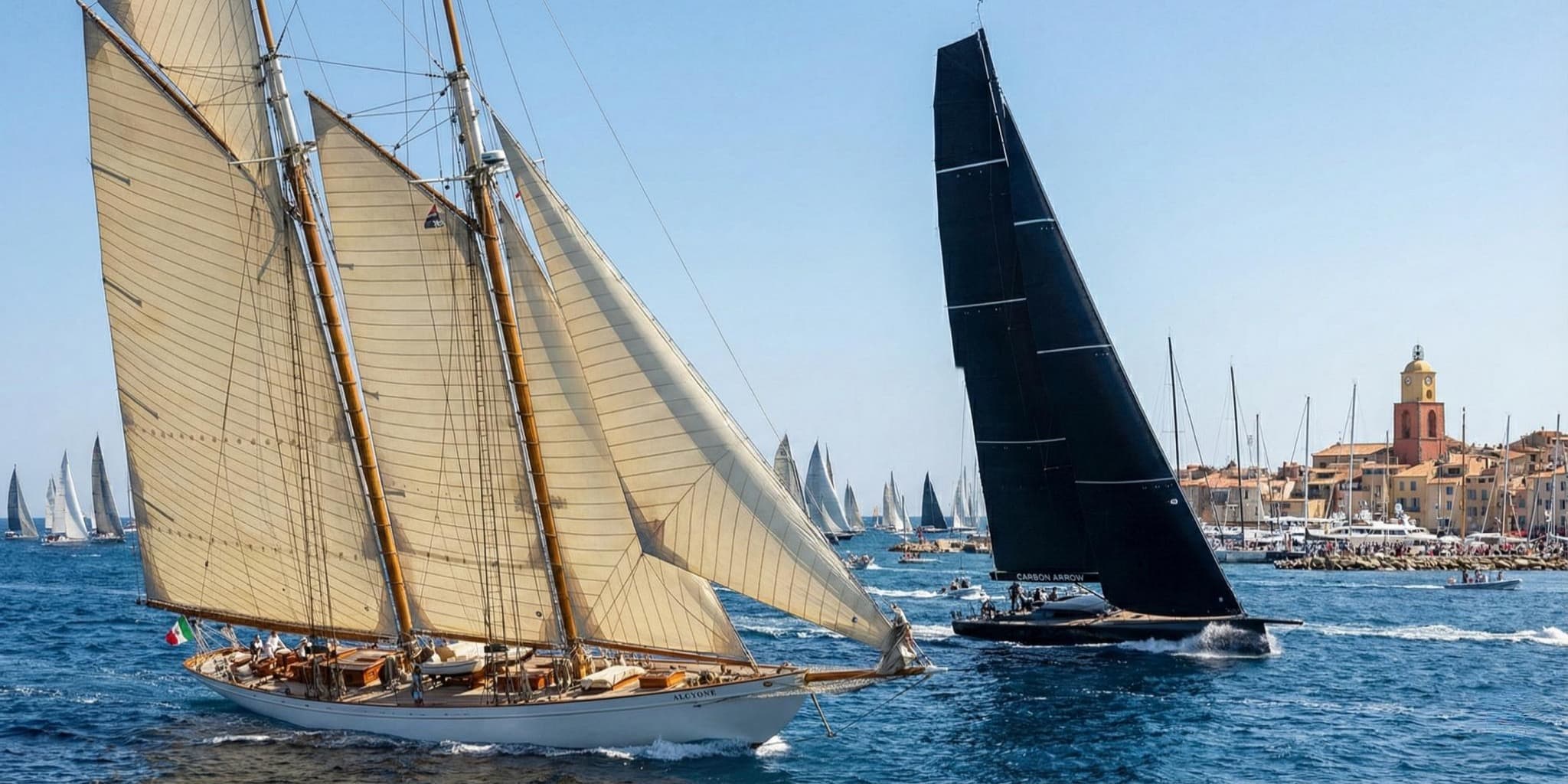
Les Voiles de Saint-Tropez 2026: The Ultimate Gathering of Classic and Modern Yachts
Witness the Mediterranean's most glamorous regatta. Experience the timeless elegance of classic schooners and the raw power of Maxis at Les Voiles de Saint-Tropez 2026.
Competing in the Blue: Essential Yacht Racing Licenses and Requirements for 2026
Ready to cross the start line? Master the essential sailing licenses and racing certifications required to compete in world-class yacht regattas in 2026.