
Steering Clear: A 2026 Summary of COLREGs (Collision Regulations at Sea)
Introduction: The Universal Language of the Ocean
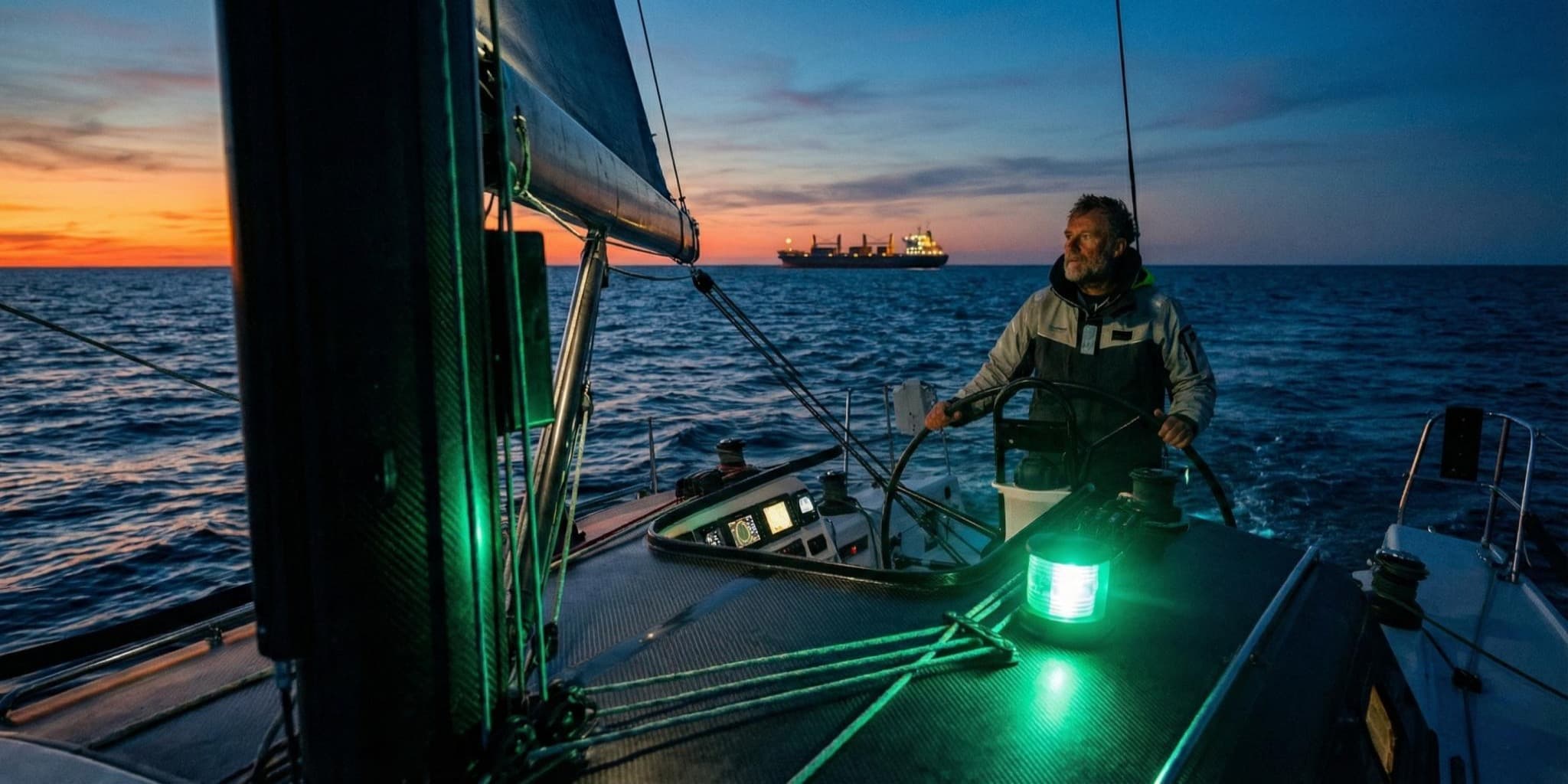
Imagine you are at the helm of a beautiful 45-foot catamaran, gliding through the azure waters of the Aegean as the sun begins to dip toward the horizon. The wind is perfect, the cocktails are being prepared on the flybridge, and the world feels entirely yours. Suddenly, a massive container ship appears on your starboard bow, and a high-speed ferry approaches from the port side. In that split second, the dream of a peaceful blue cruise can turn into a moment of high-stakes confusion.
This is where the COLREGs (International Regulations for Preventing Collisions at Sea) come into play. Often called the "Rules of the Road" for the water, COLREGs are the silent, universal language spoken by every mariner from the captain of a supertanker to a first-time sailor on a sun-drenched charter. In 2026, as our oceans become busier and more technologically advanced, understanding these rules is not just a legal requirement—it is the foundation of maritime etiquette and safety. Whether you are a software architect looking to master a new skill or a family embarking on your first private voyage, this guide will simplify the complexities of the sea into actionable, life-saving knowledge.
1. The Core Principles: Responsibility and Lookout
The most important thing to understand about COLREGs in 2026 is that they are not just "rights"; they are "responsibilities."
- Rule 2: Responsibility: This is the "common sense" rule. It states that no one is ever "right" in a collision. Even if the rules say the other boat should have moved, you are legally obligated to take action to avoid a crash.
- Rule 5: Look-out: You must maintain a proper lookout at all times by sight, hearing, and all available means (like Radar or AIS). In 2026, while AI-assisted collision avoidance is common, the human eye remains the ultimate authority on the water.
- Rule 6: Safe Speed: You must always travel at a speed that allows you to take "proper and effective action" to avoid a collision. Factors include visibility, traffic density, and the maneuverability of your vessel.
2. Knowing Your Status: Give-Way vs. Stand-On
When two boats meet, the COLREGs assign roles to ensure there is no guesswork involved in the maneuver.
The Give-Way Vessel (Rule 16)
The vessel that is required to stay out of the way of the other. In 2026, the standard is clear: take "early and substantial" action. A small, late turn is confusing to other captains; a bold, early course change signals your intent clearly.
The Stand-On Vessel (Rule 17)
The vessel that should maintain its course and speed. However, if it becomes apparent that the give-way vessel is not taking appropriate action, the stand-on vessel must act to avoid a collision.
3. Encounter Scenarios: Who Moves First?
There are three primary ways two vessels can interact. Knowing which rule applies is the hallmark of an experienced skipper.
- Overtaking (Rule 13): If you are coming up on another boat from behind (more than 22.5 degrees abaft their beam), you are the give-way vessel. You must stay clear until you are well past and clear.
- Head-On Situation (Rule 14): When two power-driven vessels meet head-on, both must turn to Starboard (Right) so that they pass each other "Port-to-Port" (Left side to Left side).
- Crossing Situation (Rule 15): When two power-driven vessels are crossing, the vessel that has the other on its Starboard side must give way. A simple rule of thumb: "If you see red (the other boat's left-side light), you must stop or turn."
4. The Hierarchy of the Sea
Not all vessels have the same ability to move. In 2026, the "Pecking Order" remains the most intuitive part of the COLREGs:
| Priority | Vessel Category | Reason |
|---|---|---|
| 1 (Highest) | Not Under Command (NUC) | Mechanical failure or steering loss. |
| 2 | Restricted in Ability to Maneuver (RAM) | Dredgers, cable layers, or underwater ops. |
| 3 | Constrained by Draft (CBD) | Large ships in narrow channels. |
| 4 | Engaged in Fishing | Trawlers or boats with nets out. |
| 5 | Sailing Vessels | Powered by wind (if engine is OFF). |
| 6 (Lowest) | Power-Driven Vessels | Standard motor yachts and sailboats under engine. |
5. Lights and Shapes: The 2026 Night Navigator
In 2026, high-intensity LEDs have made identifying boats at night easier than ever, but you must know what the colors mean.
- Port Side: Red Light.
- Starboard Side: Green Light.
- Stern: White Light.
- Sailing vs. Power: A sailboat under engine is considered a power-driven vessel. Even if the sails are up, you must display a black "cone" (point down) during the day and use your steaming lights at night.
- Anchor Lights: A single all-around white light (360 degrees) must be displayed when at anchor. In 2026, most yachts use a masthead LED for this purpose.
6. The Beginner’s COLREGs Checklist
Before you head out on your 2026 charter, run through these essential rules with your crew:
- [ ] Assign a Lookout: Ensure someone is always watching the "blind spots" behind the sails.
- [ ] Identify the "Danger Zone": From dead ahead to just behind your right (starboard) shoulder—if a boat is there, be ready to give way.
- [ ] Check the "Steaming" Light: If you turn on your engine, you must turn on your steaming light (forward-facing white light) to signal you are now a power vessel.
- [ ] Sound Signals: Remember the basics—one short blast means "I am altering my course to Starboard," and five short blasts means "I am unsure of your intentions" (the "What are you doing?" signal).
Conclusion: Command the Waves with Integrity
Mastering the COLREGs is about more than just avoiding fines or accidents; it is about the quiet confidence that comes from knowing you are a professional member of the global maritime community. When you speak the language of the sea, you protect your guests, your vessel, and the timeless tradition of safe passage. In 2026, as we embrace more autonomous and tech-heavy sailing, these core human-to-human rules remain the most important equipment on your boat.
Are you ready to apply your new knowledge on a private 2026 yacht charter? Whether you’re looking for a skippered catamaran to learn the ropes or a bareboat to show off your expertise, our fleet is ready for your next adventure.
[Explore Our 2026 Charter Fleet and Book Your Safe Adventure Today]
FAQ Section
Q: Does a sailboat always have the right of way over a motorboat?
A: No. While sailboats usually have priority, they must give way to vessels "Not Under Command" or those "Restricted in their Ability to Maneuver." Additionally, if a sailboat has its engine running, it is legally a powerboat and must follow powerboat rules, even if the sails are still up.
Q: What is "Risk of Collision" and how do I determine it?
A: The most reliable way is "Constant Bearing, Decreasing Range." If you look at an approaching boat and its position relative to a point on your railing (the bearing) doesn't change, but it's getting closer (decreasing range), you are on a collision course.
Q: Do these rules apply in international waters or just near the coast?
A: The COLREGs are international and apply to all vessels upon the high seas and in all waters connected therewith navigable by seagoing vessels. They are the globally accepted law of the sea.
Tags:
Related Articles
Navigating the Currents: The Essential Guide to Boat Insurance and Coverage for 2026
Protect your dream and your pocketbook. Master the complexities of marine insurance and secure the best boat coverage for your 2026 maritime adventures.
Set Sail with Confidence: What to Know Before Attending a Sailing Course in 2026
Transition from passenger to captain. Discover the essential certifications, gear, and mental prep needed for your 2026 sailing course success.
Master the Quay: Marina Rules and Maritime Etiquette for 2026
Don't be "that boat." Master the unspoken laws of the harbor and professional marina etiquette to ensure a seamless and respected 2026 voyage.