
Navigating the Winds: What is the Beaufort Wind Scale and How to Read It? 2026 Guide
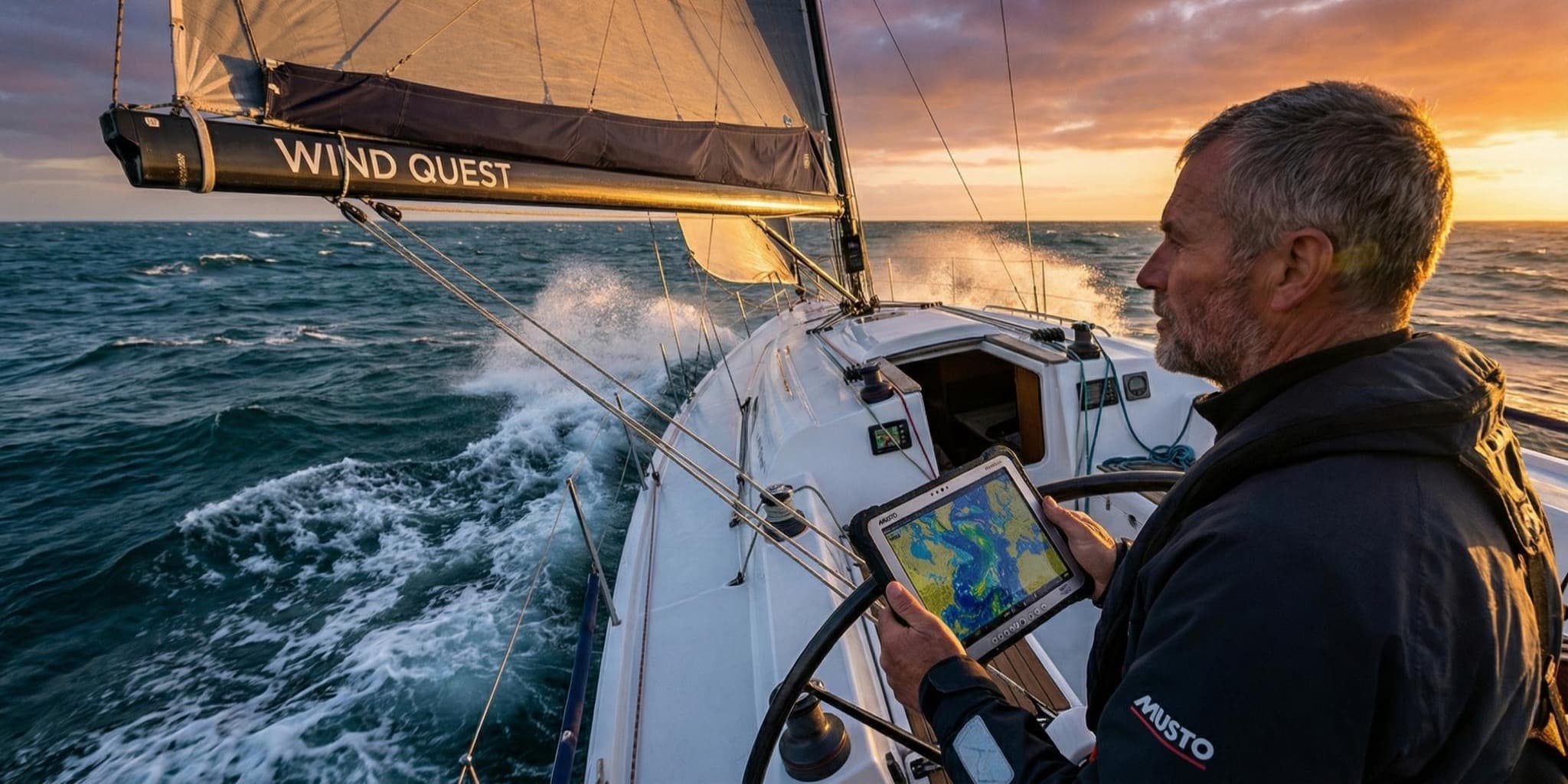
The Mediterranean sun is high, and you are lounging on the deck of your luxury catamaran. Suddenly, you notice the water’s surface changing. What was once a "glassy mirror" is now covered in small, scaly ripples. A few minutes later, you spot the first few "white horses" (whitecaps) breaking across the bay. To the untrained eye, it’s just a change in scenery. To a sailor, you have just witnessed a shift from Beaufort Force 1 to Force 3 .
In the world of modern sailing, we are surrounded by high-tech anemometers and satellite-linked weather apps. Yet, in 2026, the Beaufort Wind Scale remains the most critical "analog" skill a mariner can possess. Developed in 1805 by Sir Francis Beaufort, this scale allowed sailors to estimate wind speed by observing the state of the sea rather than relying on instruments that didn't yet exist. Today, it serves as your ultimate safety fallback—a way to "read" the ocean’s mood and make informed decisions before the first gust even hits your sails.
1. The Origin of the Scale: Why Sailors Still Use It
Before 1805, there was no universal language for wind. One captain’s "stiff breeze" was another’s "near gale." Sir Francis Beaufort, an Admiral in the British Royal Navy, revolutionized maritime safety by standardizing these descriptions based on how the wind affected the sails of a man-of-war ship.
- Subjective to Objective: It turned visual cues into a numerical value (0 to 12).
- Instrument-Free Safety: In the event of an electronic failure or a lost anemometer, the Beaufort Scale allows you to estimate wind speed within a few knots just by looking at the waves.
- Universal Communication: Marine forecasts from the Met Office to the Hellenic National Meteorological Service still use Beaufort terms like "Gale Force 8" to issue warnings.
2. Reading the Scale: From Calm to Hurricane
Understanding the Beaufort Scale is about correlating wind speed in knots with sea state and observable clues .
The Light Breezes (Force 0 to 3)
- Force 0 (Calm): < 1 knot. The sea is like a mirror. No movement on land; smoke rises vertically.
- Force 1 (Light Air): 1–3 knots. Ripples with the appearance of scales form, but without foam crests.
- Force 2 (Light Breeze): 4–6 knots. Small wavelets, short but more pronounced. Wind is felt on the face.
- Force 3 (Gentle Breeze): 7–10 knots. Large wavelets; crests begin to break. You will see scattered "white horses" (whitecaps).
The Working Winds (Force 4 to 6)
- Force 4 (Moderate Breeze): 11–16 knots. Small waves becoming longer; fairly frequent whitecaps. This is the "sweet spot" for many charter catamarans.
- Force 5 (Fresh Breeze): 17–21 knots. Moderate waves of a more pronounced long form; many whitecaps and some spray.
- Force 6 (Strong Breeze): 22–27 knots. Large waves begin to form; white foam crests are more extensive. You may hear whistling in the rigging. Time to reef the sails.
The Heavy Weather (Force 7 to 9)
- Force 7 (Near Gale): 28–33 knots. The sea heaps up, and white foam from breaking waves is blown in streaks downwind.
- Force 8 (Gale): 34–40 knots. Moderately high waves of greater length; edges of crests break into "spindrift" (blown spray).
- Force 9 (Strong Gale): 41–47 knots. High waves. Dense streaks of foam; wave crests begin to topple and roll over.
3. Beaufort Scale Comparison Table: 2026 Quick Reference
| Beaufort Force | Description | Wind Speed (Knots) | Wave Height (m) | Visual Clues at Sea |
|---|---|---|---|---|
| 0 | Calm | < 1 | 0 | Sea like a mirror. |
| 2 | Light Breeze | 4–6 | 0.2 - 0.3 | Small wavelets; no breaking crests. |
| 4 | Moderate Breeze | 11–16 | 1.0 - 1.5 | Small waves; frequent whitecaps. |
| 6 | Strong Breeze | 22–27 | 3.0 - 4.0 | Large waves; extensive white foam. |
| 8 | Gale | 34–40 | 5.5 - 7.5 | Spindrift; foam blown in streaks. |
| 10 | Storm | 48–55 | 9.0 - 12.5 | Very high waves; sea looks white. |
4. Expert Tips for Reading the Sea in 2026
- Look for the "Lag" Effect: The sea takes time to react to the wind. If the wind suddenly jumps from 5 to 20 knots, the waves will take 20–30 minutes to fully reflect a Force 5 state.
- Distance from Shore (Fetch): If you are close to a windward shore, the sea may look calm (Force 1) even if the wind is blowing Force 6. Always look further out to sea for accurate "whitecap" counts.
- Night Observations: Use your spotlight or the moon’s reflection to spot the frequency of whitecaps. If you can hear the waves "growling" or "hissing," you are likely at Force 5 or higher.
Conclusion: Mastering the Invisible Force
The Beaufort Scale is more than a historical artifact; it is a sailor’s sixth sense. By learning to correlate the texture of the water with the pressure on your sails, you become more than just a passenger—you become a true navigator. In 2026, as we embrace high-tech sailing, let the Beaufort Scale be your grounded, reliable connection to the ancient rhythm of the sea.
Ready to put your navigation skills to the test in the pristine waters of the Adriatic or the Aegean? [Explore our 2026 Luxury Fleet] and book your next charter. Whether you want to take the helm or relax with a professional skipper, your adventure starts here.
FAQ Section
Q: Is the Beaufort Scale the same as the Saffir-Simpson Scale?
A: No. The Beaufort Scale (0–12) is used for general wind and sea states. The Saffir-Simpson Scale (Category 1–5) is used specifically to measure the intensity of hurricanes. Beaufort Force 12 is technically where Category 1 hurricanes begin.
Q: Why does the sea look different in 20 knots of wind in different places?
A: This is due to "Fetch" and "Current." Wind blowing against a strong current (Wind-against-Tide) will create much steeper, more dangerous waves than wind blowing in the same direction as the water’s movement.
Q: Can I use the Beaufort Scale on land?
A: Yes! The scale has specific land-based clues: at Force 4, dust and loose paper are raised; at Force 6, umbrellas are used with difficulty; and at Force 10, trees are uprooted.
Meta Title: What is the Beaufort Wind Scale? 2026 Sailor’s Reading Guide
Meta Description: Master the Beaufort Wind Scale. Learn to estimate wind speed and sea state via visual cues for safer 2026 sailing. Expert tips for beginners included!
Tags: Beaufort Scale, Wind Speed, Sailing Tips, Maritime Safety, 2026 Yachting, Sea State, Beginner Guides, Navigation
Category: Beginner Guides
Tags:
Related Articles
Navigating the Currents: The Essential Guide to Boat Insurance and Coverage for 2026
Protect your dream and your pocketbook. Master the complexities of marine insurance and secure the best boat coverage for your 2026 maritime adventures.
Set Sail with Confidence: What to Know Before Attending a Sailing Course in 2026
Transition from passenger to captain. Discover the essential certifications, gear, and mental prep needed for your 2026 sailing course success.
Master the Quay: Marina Rules and Maritime Etiquette for 2026
Don't be "that boat." Master the unspoken laws of the harbor and professional marina etiquette to ensure a seamless and respected 2026 voyage.