
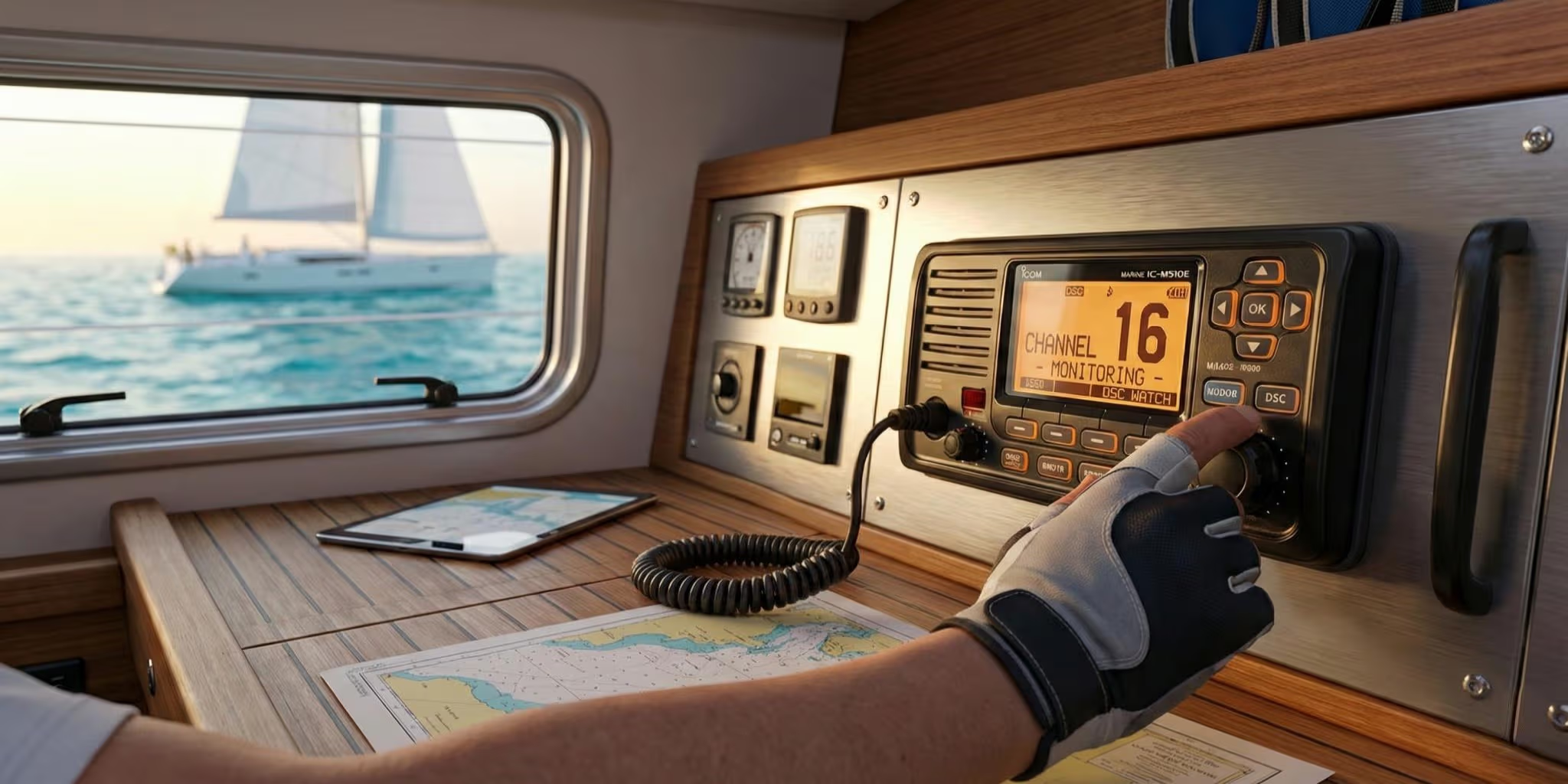
2026 Guide: Is a Short Range Certificate (SRC/VHF) Necessary for You?
Introduction: The Voice of the Sea
Imagine you are cruising a rugged coastline as the sun begins to set, and a sudden, unexpected engine vibration starts to resonate through the hull. You reach for the radio to check in with the nearest marina or, in a worse-case scenario, to call for assistance. But as you hold the mic, a realization hits: do you know the correct protocols to ensure you are heard? More importantly, are you legally allowed to press that button?
In the maritime world of 2026, the Short Range Certificate (SRC) , commonly known as the VHF license, has transitioned from a "useful skill" to a fundamental pillar of seamanship. Whether you are dreaming of chartering a sleek catamaran in the Mediterranean or helming your own vessel along the coast, the SRC is your official "voice" at sea. This guide explores why this small piece of plastic is the most powerful tool in your navigation kit and why, in 2026, it’s more necessary than ever.
1. The Legal Reality: Why You Can't Skip the License
For many beginners, the question is simple: Is it actually a law? The answer in 2026 is a resounding yes .
- The Operator's License: International radio regulations prohibit the operation of a transmitting station by an unlicensed person. If your boat is fitted with a VHF radio (fixed or handheld), at least one person on board must hold an operator's license.
- Charter Requirements: In 2026, leading charter companies across Greece, Croatia, Italy, and the Caribbean have standardized their requirements. Without a valid SRC/VHF certificate, you may be denied the keys to your boat, even if you have a high-level sailing license like the Day Skipper or Yachtmaster.
- GMDSS Compliance: Modern radios use Digital Selective Calling (DSC) . Operating this equipment is part of the Global Maritime Distress and Safety System (GMDSS), which strictly requires certified training to prevent false alerts and ensure emergency signals are handled correctly.
2. Safety Beyond the Law: Why You Need the Knowledge
While the legalities get you on the boat, the knowledge keeps you safe. An SRC course isn't just about memorizing channels; it's about mastering communication under pressure.
- The Mayday Protocol: In a high-stress emergency, "thinking" about what to say is a luxury you don't have. The SRC trains you in the Mayday and Pan-Pan formats so they become muscle memory.
- Digital Selective Calling (DSC): You will learn how to send an automated distress alert that transmits your exact GPS coordinates to the Coast Guard and all nearby vessels with the push of a single red button.
- Etiquette and Protocol: The radio is a shared resource. Learning the "International Phonetic Alphabet" and proper channel usage ensures you don't clog emergency frequencies with routine chatter.
- EPIRBs and SARTs: Most 2026 SRC courses now include training on how to activate and manage Emergency Position Indicating Radio Beacons (EPIRBs) and Search and Rescue Transponders (SARTs).
3. SRC vs. LRC: Which One is Right for You?
Not all radio certificates are created equal. Depending on where you plan to sail in 2026, you may need to choose between the Short Range and Long Range options.
| Feature | Short Range Certificate (SRC) | Long Range Certificate (LRC) |
|---|---|---|
| Range | 30–40 Nautical Miles (VHF) | Global (VHF + MF/HF/Satellite) |
| Equipment | Handheld & Fixed VHF/DSC | SSB, Inmarsat, MF/HF Radios |
| Best For | Coastal Cruisers, Chartering, Day Sailing | Ocean Crossings, Remote Expeditions |
| Course Duration | 1 Day (approx. 10 hours) | 4 Days (intensive) |
| 2026 Popularity | 95% of recreational sailors | Professional & Blue-Water Cruisers |
4. How to Get Your SRC in 2026: The Path to Certification
Getting certified has never been easier. In 2026, the process is streamlined to fit into a busy schedule.
- Eligibility: You must be at least 16 years old to take the exam.
- Learning Options: You can choose between a one-day classroom course or a flexible online theory module .
- The Exam: Regardless of how you study, the final assessment must be done in person at an accredited training center. It consists of a short written theory paper and a practical "role-play" assessment using real (or simulated) VHF radios.
- The Cost: In 2026, expect to pay approximately £140 - £200 ($180 - $250) for the course, plus a separate licensing fee (approx. £70/€80) paid to the issuing authority (like the RYA or Ofcom).
5. 2026 Essential VHF Checklist
Once you have your certificate, ensure your vessel’s radio setup is 2026-compliant:
- [ ] Ship Radio License: Does your boat have its own license (MMSI number)? The SRC is for the person , but the boat needs its own equipment license.
- [ ] Handheld Backup: Do you carry a waterproof handheld VHF in your ditch bag?
- [ ] Laminated Protocols: Are Mayday and Pan-Pan templates posted clearly next to the radio for the crew to see?
- [ ] Routine Check: Do you perform a "Radio Check" on a working channel (not Channel 16!) before every departure?
Conclusion: Empower Your Command
The Short Range Certificate is more than just a legal hurdle; it is your ticket to a safer, more professional sailing experience. It transforms a piece of electronics into a life-saving link to the rest of the world. In 2026, as our seas become busier and our technology more integrated, being a "licensed operator" is a badge of honor that shows you respect the sea and your fellow mariners.
Would you like me to help you find an accredited SRC training center near your location or provide a 2026 list of the best handheld VHF radios for your next charter?
FAQ Section
Q: Does the SRC certificate expire?
A: No. Once you have earned your Short Range Certificate, it is valid for life. However, it is highly recommended to take a "refresher" session every few years if you haven't used a marine radio frequently, as technology and protocols (like DSC) can evolve.
Q: Can I use my VHF radio for a casual chat with friends on other boats?
A: Yes, but only on designated "ship-to-ship" working channels (like Channel 72 or 77). Channel 16 is strictly for hailing and distress. The SRC course will teach you exactly which channels are appropriate for "social" vs. "safety" communication.
Q: If the skipper has an SRC, do the guests need one too?
A: Legally, only one person on board needs the license to satisfy the requirement that the radio is "under the supervision" of a qualified operator. However, for safety, it is an excellent idea for at least one other crew member to know how to use the radio in case the skipper is incapacitated.
Meta Title: Is an SRC/VHF Certificate Necessary? 2026 Beginner Guide
Meta Description: Discover why the Short Range Certificate (SRC) is essential for sailing in 2026. Learn about legal requirements, safety benefits, and how to get your VHF license.
Tags: SRC Certificate, VHF License, Sailing for Beginners, Marine Radio, Yacht Charter 2026, RYA Course, GMDSS, Maritime Safety
Category: Beginner Guides
Tags:
Related Articles
Navigating the Currents: The Essential Guide to Boat Insurance and Coverage for 2026
Protect your dream and your pocketbook. Master the complexities of marine insurance and secure the best boat coverage for your 2026 maritime adventures.
Set Sail with Confidence: What to Know Before Attending a Sailing Course in 2026
Transition from passenger to captain. Discover the essential certifications, gear, and mental prep needed for your 2026 sailing course success.
Master the Quay: Marina Rules and Maritime Etiquette for 2026
Don't be "that boat." Master the unspoken laws of the harbor and professional marina etiquette to ensure a seamless and respected 2026 voyage.