
The Art of the Atlantic Larder: Provisioning and Storage for Long-Distance Cruising in 2026
Introduction: The Logistics of Liberty
Imagine you are ten days into an Atlantic crossing. The nearest supermarket is 1,200 nautical miles behind you, and the next one is just as far ahead. The wind is a steady trade breeze, and the yacht is humming along at eight knots. In this moment, the "dream" is total self-sufficiency. But then comes the hunger—not just for calories, but for variety, freshness, and the comfort of a well-cooked meal.
For the long-distance voyager, the galley is the engine room of morale. The "problem" isn't just buying food; it is the complex calculation of shelf-life, calorie density, and the ruthless physics of boat storage. In 2026, as we command faster yachts like the Elan GT6 and explore further with the Bookberry Engine’s logistics, the hallmark of a senior mariner is the ability to provision for a month while maintaining the standards of a gourmet kitchen. This guide is your authoritative roadmap to transforming your yacht into a floating cornucopia, ensuring you remain fueled for adventure, no matter how far the horizon retreats.
1. The Strategic Menu: Calculating Your "Sea-Legs" Calories
In 2026, we no longer "bulk buy" blindly. Professional provisioning starts with data-driven menu planning.
- The 1.5x Rule: When sailing long distances, the body burns significantly more calories due to constant motion and temperature regulation. Plan for 1.5 times your normal daily intake.
- The "Three-Tier" System:
- Fresh Tier (Days 1–7): Leafy greens, soft fruits, and fresh proteins.
- Transition Tier (Days 8–18): Cabbage, carrots, citrus, and vacuum-sealed meats.
- Survival/Comfort Tier (Days 19+): Legumes, grains, tinned delicacies, and sprouted seeds.
- Energy Management: Focus on slow-release carbohydrates (oats, brown rice) to avoid the "sugar crash" during night watches.
- Hydration Logistics: While your 2026 portable watermaker is your primary source, always carry a 20% "emergency reserve" of bottled water stored in the lowest, coolest part of the bilge.
2. Advanced Storage: Fighting Humidity and Motion
How you store your provisions is just as important as what you buy. On a long-distance cruise, the sea is constantly trying to reclaim your food through rot, rust, or motion.
The "Dry-and-Cool" Hierarchy
Storage on a yacht is a game of temperature zones.
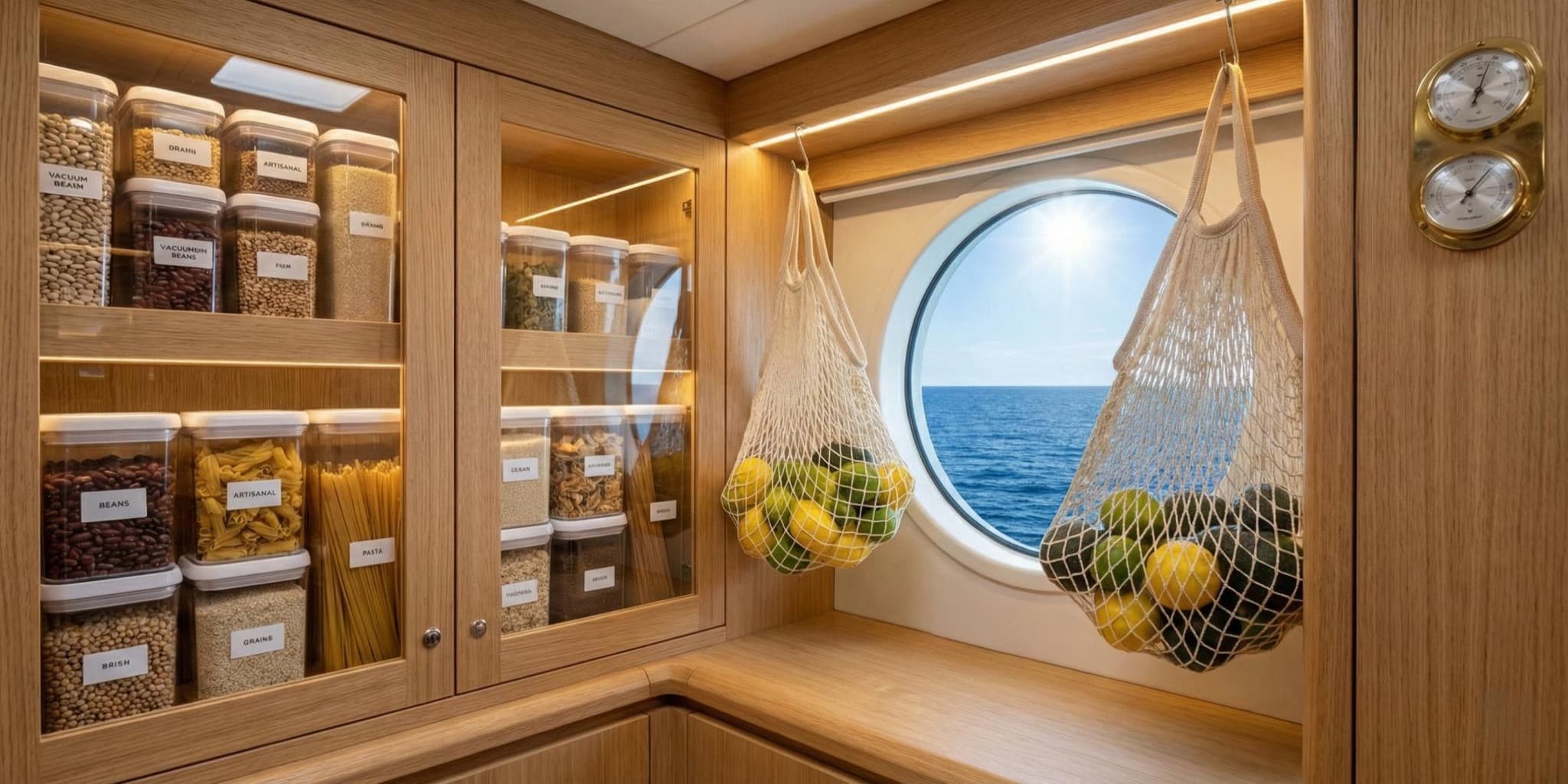
- The Bilge (Coolest): Ideal for root vegetables and canned goods (ensure labels are taped or marked with permanent ink, as labels rot in damp environments).
- Upper Lockers (Warmest): Best for snacks, bread, and items in high rotation.
- The "Produce Net": Essential for airflow. Hang tomatoes and avocados separately to prevent accelerated ripening caused by ethylene gas.
Professional Packing Techniques
- De-boxing: Cardboard is the enemy. It harbors cockroach eggs and takes up unnecessary volume. Transfer everything into airtight, BPA-free containers before they board.
- Vacuum Sealing: In 2026, this is non-negotiable for long-distance cruising. Vacuum-sealing meat and hard cheeses can triple their shelf-life in a small marine fridge.
- The "Turn" Ritual: Every three days, rotate your citrus and potatoes. This prevents "hot spots" of rot from spreading through your entire stock.
3. Comparison: Traditional Provisions vs. 2026 Innovation
| Feature | Traditional Cruising Larder | 2026 Smart Provisioning |
| Proteins | Canned Meats / Salted Pork | Sous-vide / Vacuum-sealed / Plant-based |
| Freshness | Wilting Greens in 4 days | Onboard Sprouting / Microgreens |
| Inventory | Paper lists (Often lost) | Digital Inventory Apps (QR Scanned) |
| Waste | High plastic/can volume | Compostable / Minimalist Packaging |
| Energy | Gas Cooking (Hot galley) | Induction / Solar-powered Slow Cookers |
4. The 2026 Long-Distance Provisioning Checklist
Before you clear the breakwater for a multi-week passage, run through this "Larder Audit":
- [ ] The "Spice Bank": Fresh food fades, but spices don't. Carry a wide array of high-quality dried herbs and hot sauces to vary the flavor of grain-based meals.
- [ ] Egg Preservation: Traditional 2026 wisdom still holds—coat fresh, unwashed farm eggs in a thin layer of Vaseline or mineral oil to seal the pores and keep them fresh for weeks without refrigeration.
- [ ] Flour Management: Buy flour in small, 1kg bags rather than one large sack. If one bag gets "weevils," the rest remain safe.
- [ ] Comfort Foods: Never underestimate the power of a single bar of high-quality chocolate or a bag of gourmet coffee during a 3:00 AM watch.
- [ ] Inventory Map: Tape a "Locker Map" to the inside of a galley door. Knowing exactly where the "Extra Olive Oil" is stored prevents unnecessary locker digging in heavy seas.
5. Expert Tip: The "Bilge-to-Table" Philosophy
For 2026 voyagers, we recommend "The Sprout Garden." A small jar with a mesh lid can grow nutrient-dense alfalfa or mung bean sprouts in 3-5 days using only a splash of freshwater. It provides the essential crunch and Vitamin C of fresh greens even on day 25 of a crossing, significantly boosting crew morale and health.
Conclusion: Command Your Sustenance
Provisioning for long-distance cruising is a blend of science, art, and discipline. It is the quiet work done in port that allows for the loud joys of the open sea. By mastering the 2026 standards of storage and selection, you ensure that your yacht remains a sanctuary of health and comfort, regardless of the distance from land. When the meal is good, the passage is great.
Are you ready to stock your 2026 larder? Whether you are planning an Atlantic circuit or a deep-exploration of the Mediterranean, our 2026 fleet and expert provisioning partners are ready to ensure your voyage is as delicious as it is adventurous.
[Explore Our 2026 Long-Distance Fleet and Book Your Voyage Today]
FAQ Section
Q: How much food should I actually buy for a 21-day crossing?
A: The standard professional calculation is 21 days of planned meals + 10 days of "buffer" rations. This accounts for unexpected weather delays or light-wind days where the passage may take longer than the routing software predicts.
Q: Can I rely on catching fish for my primary protein?
A: No. In 2026, we treat "Catch of the Day" as a bonus, not a staple. Some days the fish simply don't bite, or the weather is too rough to safely bring a large tuna on board. Always provision as if you won't catch a single fish.
Q: What is the best way to keep bread fresh?
A: Traditional bread will mold within 5 days in a humid marine environment. In 2026, we recommend "Part-Baked" vacuum-packed loaves that can be finished in the oven, or better yet, carrying the ingredients to bake fresh bread or tortillas on board.
Tags:
Related Articles
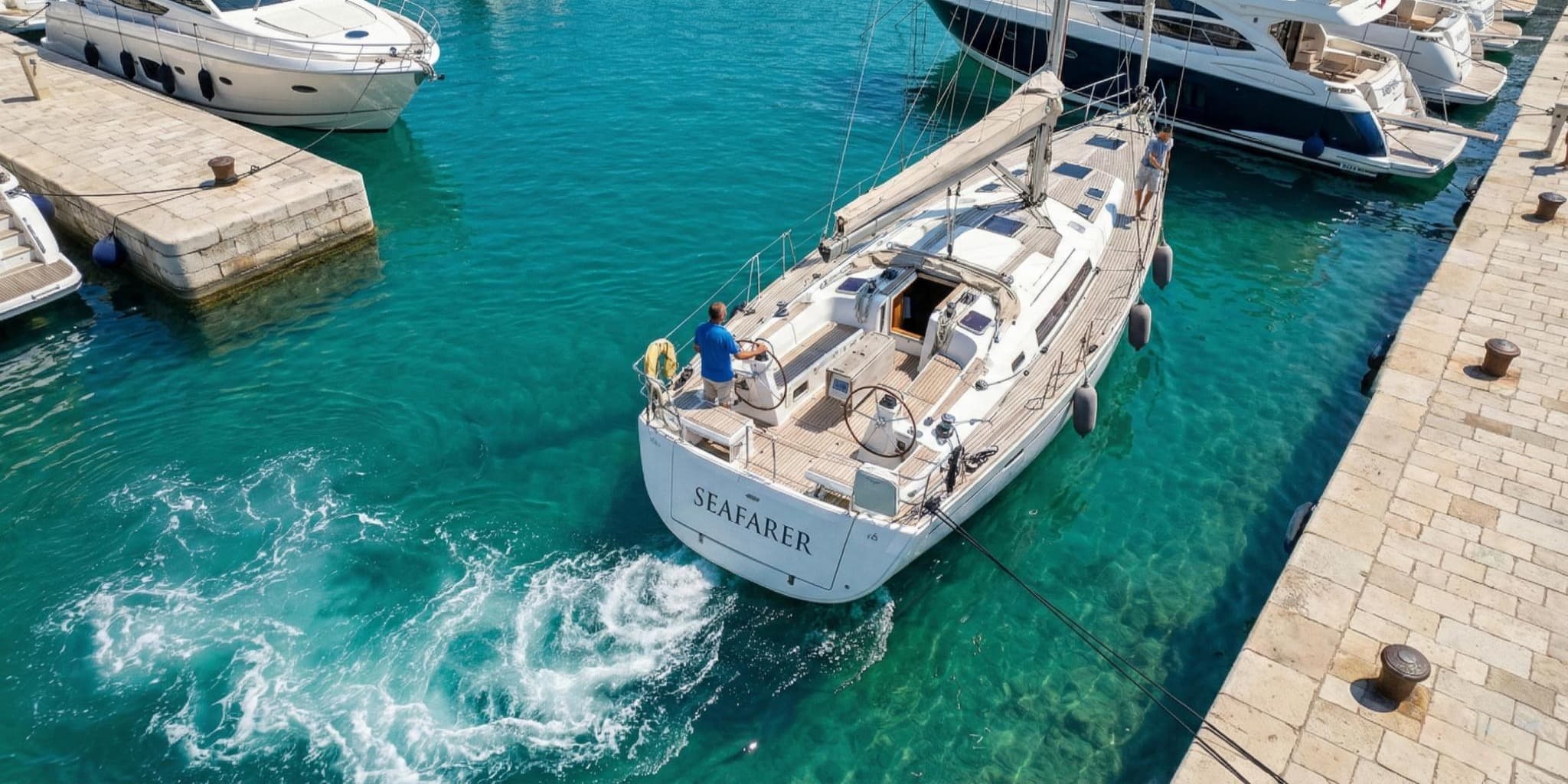
Mastering the Kick: Using Prop Walk to Your Advantage in 2026 Marina Maneuvers
Stop fighting the "kick" and start using it. Master the professional art of using prop walk for precision docking and tight turns in 2026.
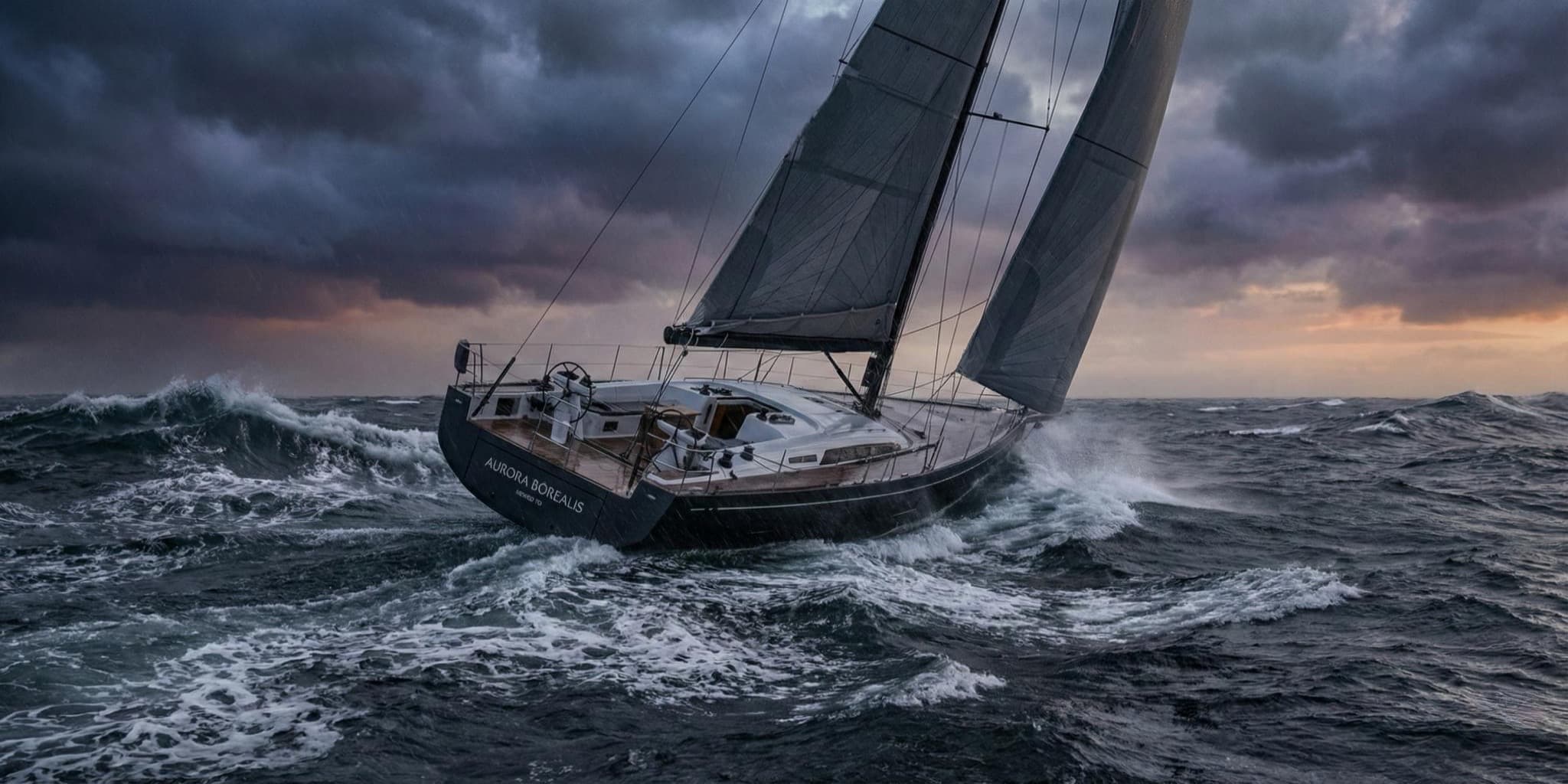
Mastering the Calm: How to Heave-to Correctly in 2026
When the horizon turns gray, knowledge is your best anchor. Master the essential storm tactic of heaving-to for safety and peace of mind in 2026.
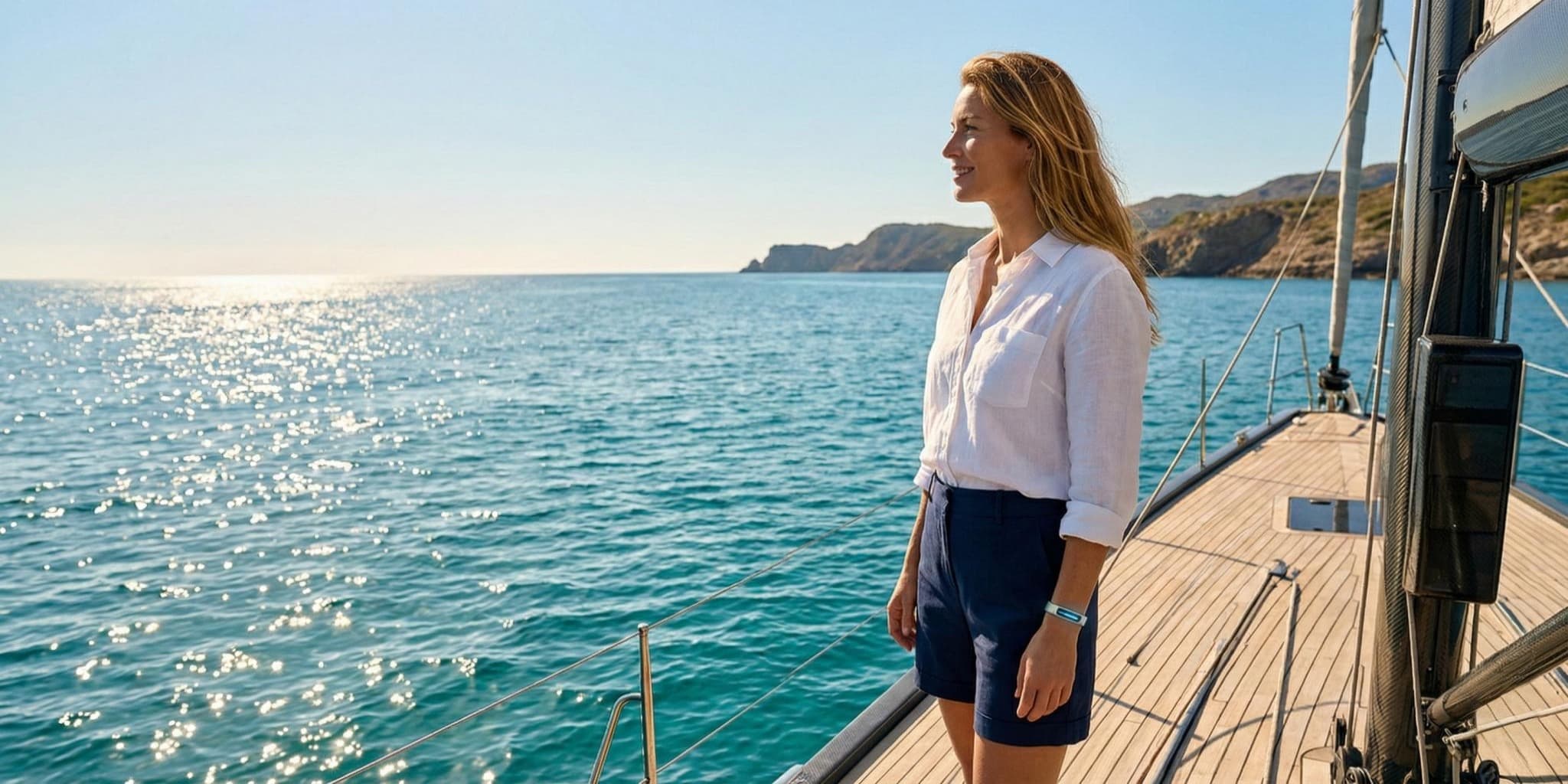
Conquer the Swell: Seasickness Remedies and Medical Solutions for 2026
Don't let motion sickness anchor your spirit. Master the best natural and medical seasickness solutions to ensure a smooth, adventurous 2026 voyage.