
Grip the Horizon: Sailing Gloves—Full Finger vs. Fingerless Guide for 2026
Introduction: The Interface of Power and Precision
Imagine you are at the helm of a high-performance X-Yachts X4⁶, leaning into a sharp tack as a 20-knot gust sweeps across the deck. You reach for the jib sheet, and in that split second, the raw energy of the wind is transferred directly into your palms. For a sailor, your hands are the primary sensors—the critical interface between your intent and the vessel's response. The "dream" is a seamless connection to the sea, where every trim is effortless and every knot is secure.
However, the "problem" for many mariners is the brutal reality of salt, friction, and cold. Without the right protection, the very lines that give you command can become your greatest enemy, leading to "rope burn" that can sideline a skipper for days. In 2026, as high-modulus lines like Dyneema and Vectran become standard even on leisure cruisers, the choice of handwear has evolved from a mere accessory to a piece of essential safety equipment. Whether you are a software architect refining your racing technique or a business director enjoying a private blue cruise, choosing between full finger and fingerless sailing gloves is the first tactical decision of your season.
1. Fingerless Sailing Gloves: The Precision Tool
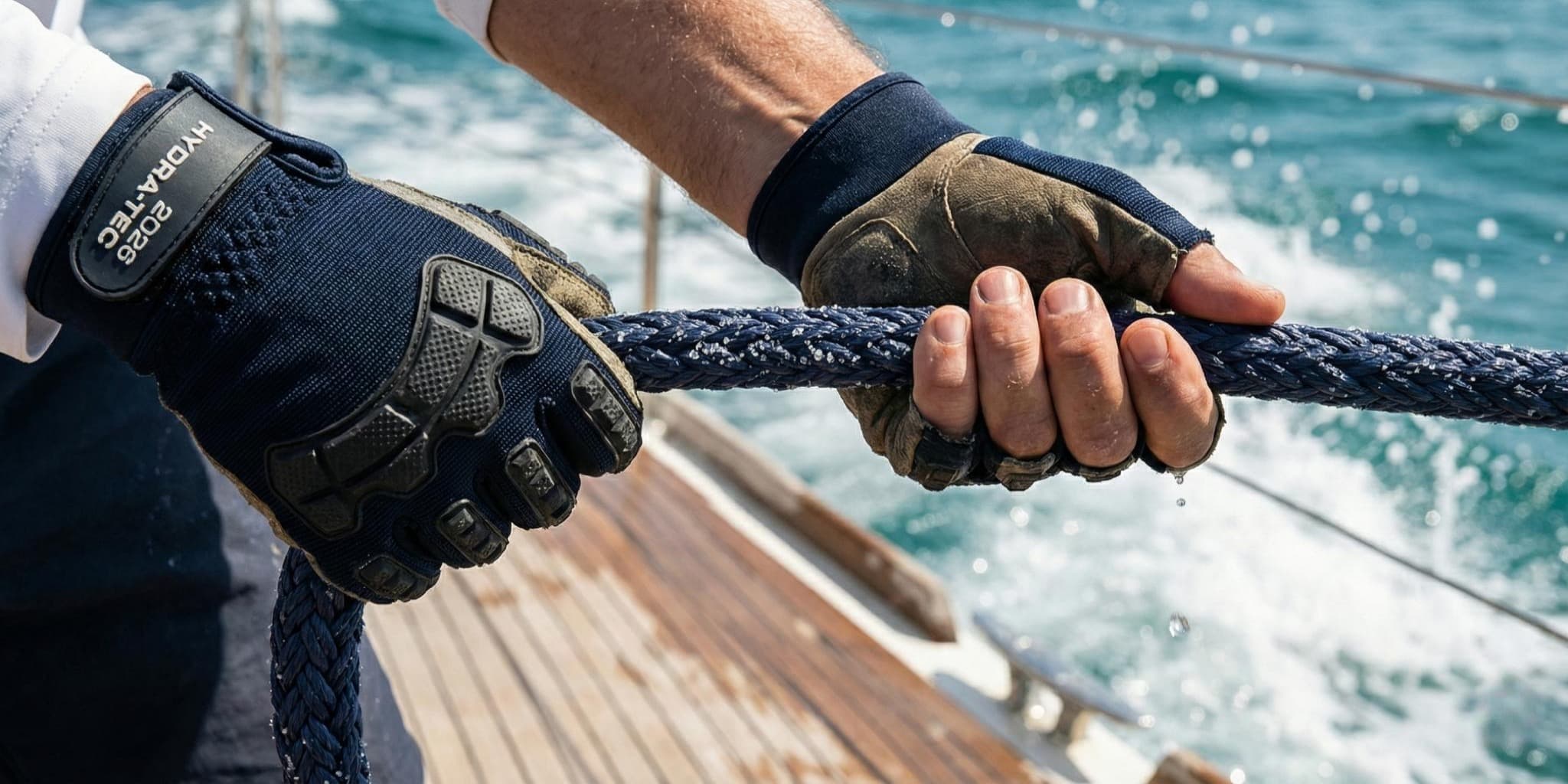
Fingerless gloves, typically exposing the thumb and index finger (or all five tips), have long been the favorite of the Mediterranean cruiser and the tactical navigator.
- Unmatched Dexterity: The primary advantage is tactile feedback. In 2026, where we rely heavily on high-resolution touchscreens for the Bookberry Engine or digital chartplotters, having bare fingertips allows for millimetric precision without removing your gear.
- The "Knot-Master" Advantage: Tying a delicate bowline or clearing a jammed block requires a level of feel that only skin can provide. Fingerless gloves allow you to manage heavy loads on your palms while keeping your fine motor skills intact.
- Thermal Regulation: For sailing in warm climates like Malta or the Turkish Riviera, fingerless gloves offer superior ventilation, preventing the "swamp-hand" effect during long afternoon watches.
- Reinforced Palms: Most 2026 models feature Amara or Kevlar palm reinforcement, protecting the "meaty" part of your hand from the heat generated by a fast-running line.
2. Full Finger Sailing Gloves: The Shield of the North
As we push further into adventurous territory or tackle the grueling conditions of an offshore regatta, full finger protection becomes the professional standard.
- Total Protection: In high-load environments—like grinding a winch on a Maxi yacht—the friction generated can be extreme. Full finger gloves eliminate the risk of the line catching an exposed fingertip, a common and painful racing injury.
- Warmth and Weather Resistance: For those exploring the rugged coasts of Montenegro or the Atlantic in the early 2026 season, the wind chill can quickly degrade your grip strength. Full finger gloves provide a critical thermal barrier.
- The "Three-Finger" Hybrid: A popular 2026 innovation is the hybrid glove, which leaves only the thumb and index finger exposed while covering the rest. This offers 80% of the protection of a full glove with the dexterity needed for electronics.
- Enhanced Grip Strength: Modern synthetic materials used in 2026 full-finger designs actually improve your grip on wet lines, allowing you to hold higher loads with less muscle fatigue.
3. Comparison: Full Finger vs. Fingerless (2026 Edition)
| Feature | Fingerless Sailing Gloves | Full Finger Sailing Gloves |
| Tactile Feel | Exceptional (Skin contact) | Moderate (Material dependent) |
| Rope Burn Protection | Good (Palms only) | Excellent (Total coverage) |
| Device Compatibility | Perfect for all touchscreens | Requires capacitive fingertips |
| Breathability | High (Cool in summer) | Moderate to Low |
| Best Use Case | Coastal Cruising / Navigation | Racing / Offshore / Cold Weather |
| Knot Tying | Effortless | Requires practice / Training |
4. Materials Matter: The 2026 Tech Upgrade
When selecting your gloves for the upcoming season, look beyond the cut and focus on the 2026 material standards:
- [ ] Amara Synthetic Leather: Stays soft even after repeated salt-water soaking and drying cycles.
- [ ] Kevlar Stitching: Essential for durability. Standard thread will dissolve under the friction of modern high-performance lines.
- [ ] Neoprene Wrist Closures: Look for the "Secure-Fit" 2026 designs that prevent the glove from sliding off when your hands are wet and under load.
- [ ] Grip-Tech Palm Overlays: New silicone-infused palms offer 30% more friction on wet ropes than the models of five years ago.
- [ ] 4-Way Stretch Backing: Ensures the glove moves with your hand, reducing the risk of "claw-hand" fatigue during long races.
5. The 2026 Glove Maintenance Checklist
To ensure your investment lasts the entire 2026 season, follow this professional "Locker Protocol":
- [ ] Freshwater Rinse: After every use, rinse your gloves in fresh water. Salt crystals act like sandpaper on the synthetic fibers.
- [ ] Air Dry (No Heat): Never put sailing gloves on a radiator or in a dryer. High heat makes the Amara palm material brittle and prone to cracking.
- [ ] The "Velcro" Check: Ensure the wrist closures are free of lint and salt crust. A glove that comes loose during a jibe is a safety hazard.
- [ ] Rotation Strategy: Professional mariners always carry two pairs. One for the heavy work (Full Finger) and one for the precision work/social hours (Fingerless).
Conclusion: Command with Your Fingertips
Choosing between full finger and fingerless sailing gloves is more than a matter of comfort; it is an expression of your sailing style. If your 2026 vision involves high-speed racing and offshore passages, the total protection of a full-finger glove is your primary shield. If you see yourself navigating the sun-drenched coves of the Mediterranean, the precision of a fingerless design will be your greatest ally. In either case, the right glove ensures that you remain the master of the lines, rather than their victim.
Are you ready to take the helm in 2026? Whether you’re looking to charter a performance yacht to test your new gear or need expert advice on the best equipment for a Mediterranean Blue Cruise, our specialists are ready to guide your journey.
[Explore Our 2026 High-Performance Fleet and Book Your Voyage Today]
FAQ Section
Q: Do I need special gloves for a catamaran charter?
A: Because catamarans are generally more stable and have larger, often electric winches, the "load" on your hands is often less than on a monohull. Fingerless gloves are typically the preferred 2026 choice for catamaran cruising, offering comfort and ease of use for the social sailor.
Q: How tight should my sailing gloves be?
A: They should be "snug but not restrictive." If they are too loose, the fabric will "bunch" in your palm, leading to blisters. If they are too tight, they will restrict blood flow, making your hands cold and prone to cramping during maneuvers.
Q: Can I use weightlifting or cycling gloves for sailing?
A: While they look similar, they are not built for the maritime environment. Cycling gloves lack the palm reinforcement needed for rope friction, and the materials will quickly degrade in salt water. For 2026 safety standards, always use purpose-built maritime gloves.
Tags:
Related Articles

Piercing the Darkness: The Ultimate Guide to Night Vision Binoculars and Thermal Cameras in 2026
Master the night and ensure total safety at sea. Discover how 2026 night vision and thermal imaging tech transform nocturnal navigation into a vivid reality.
The Ultimate Freedom: Are Portable Watermakers Worth It in 2026?
Break free from the dock. Explore the real-world value of portable watermakers in 2026 and discover if these compact units are the key to your autonomy.

Master the High Seas Menu: Essential Practical Equipment for the Galley 2026
Transform your boat kitchen into a chef's sanctuary. Master the 2026 essentials of galley equipment for gourmet dining on the move.